

Astro Bot on AnyPS5
In game Reaches real gameplay on a testing branch (Linux and Windows) at roughly 3 to 19 FPS; plain main still stops before the first frame in recent reports.
- Nothing
- Boots
- Menus
- In game
- Playable
Gameplay (the Crash Site tutorial and first levels) was reached on Linux and Windows using the `astrobot` testing branch, which holds fixes not yet in main; no one has shown it on plain current main.
Running it and it stopped on an error? Check the error against every report and fix for this game.
Screenshots
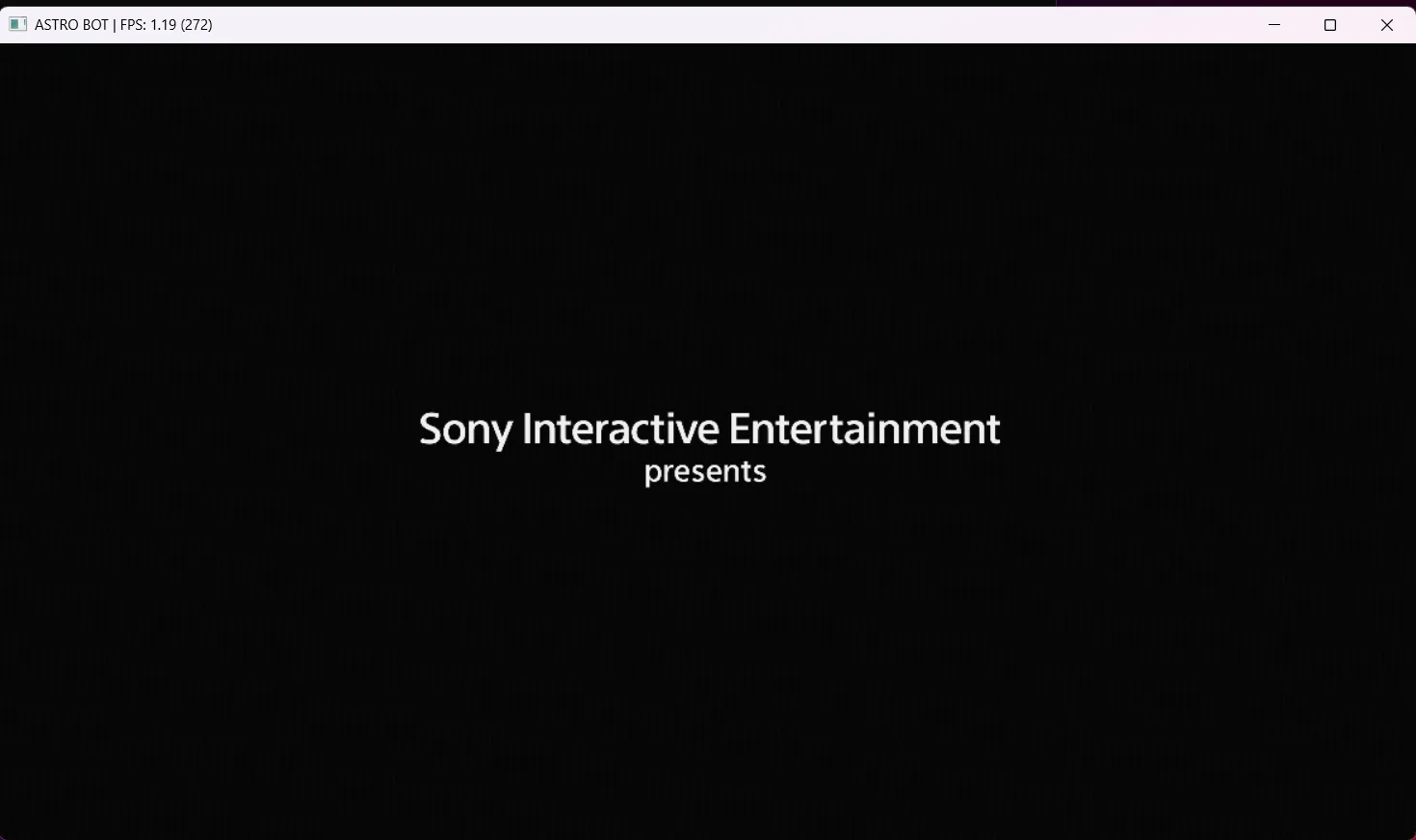
Posted by testers in the project's threads; the date links to the post. Click to enlarge.
Where it stands
Astro Bot is the furthest along of the games tracked here. On a testing branch (called `astrobot`, maintained by oneandonlydean, with extra Windows fixes from other contributors) the game shows the PlayStation Studios logos, the title screen, the save menu and the intro cinematic. It then plays the Crash Site tutorial, flies out to the galaxy map and loads levels such as Sky Garden, Gorilla Nebula and Aerial Garden. A DualSense controller works, including over Bluetooth on Windows. Sound plays.
Speed is the big problem. Reports range from about 3 FPS in most levels to 11 FPS in the Crash Site on a very fast Windows PC with a locally modified build, and 17 to 19 FPS on a Radeon RX 9060 XT with stutters. Title and menu screens run faster, from 9 up to about 45 FPS depending on the PC. The game's main graphics work is done one draw call at a time on a single thread, and that thread is the limit. Cards with 8 GB of video memory can also run out of memory in heavy levels. A tester on an 8 GB card ran about 80 of the game's 125 levels in short tests, and the thread lists out-of-memory crashes and a few other level-specific stops.
Plain current main is behind the branch. Many of the branch's graphics fixes have been merged into main one by one, and recent main reports show startup problems being cleared quickly: a Windows crash in the audio thread, a corrupted command buffer on AMD/Linux (fixed 2026-10-10) and a shader that could not be prepared on NVIDIA/Linux. Even so, the latest main reports on Linux (RTX 3090) show the game still compiling shaders with no window or frame at 5 minutes, and an RX 9070 XT run hits a graphics-card hang (a mesh-shader draw that never finishes) after 70 to 140 seconds. A Windows RTX 3060 Ti user hit an early shader crash at startup (reported 2026-10-09, closed as a duplicate of a problem the shader-deferral fix addresses). No one has shown gameplay on plain main, so for now the branch is the only way to see the game running.
There are two regional releases in the reports: PPSA21564 (version 01.007.000) and PPSA21567 (01.018 and 01.019). Both reach the same point on the branch. The Linux builds of the branch needed a special libc build option for PPSA21567 because that release ships its own C library. You also need to supply your own legally dumped game files.
| Windows | Gameplay on the testing branch at about 2.7 to 19 FPS depending on the PC (about 11 FPS with a locally optimised build); an early shader crash at startup was reported on a recent main build (RTX 3060 Ti). |
|---|---|
| Linux | Gameplay on the testing branch (Nvidia, about 3 FPS in levels, 9 FPS in menus); on plain main the latest runs stop before the first frame or hit GPU hangs (AMD). |
| macOS | No test report yet |
What is stopping it
- A mesh-shader draw (40 workgroups) never finishes and hangs an AMD RX 9070 XT (RADV) 70 to 140 seconds in, forcing a GPU reset. Cause not found yet. Thread
- On NVIDIA/Linux plain main, a small vertex shader that uses a barrier fails validation at its first draw and aborts the game. Thread
- Speed: the single graphics worker thread is the bottleneck, giving about 3 FPS in most levels on many PCs; around 1000 render-pass breaks per frame were measured on one Windows PC. Thread
- 8 GB graphics cards run out of video memory in heavy levels; mitigations (smaller texture caches, skipping the top texture detail) were proposed but are not on main. Thread
- Sampler border colours from a table are not implemented; this ended both Armadillo challenge levels in testing. Thread
- A shader with a 2D comparison sample on a plain 2D image has no prepared mode, so the game stops about 80 seconds in on plain main (RADV); a one-line workaround was tested locally. Thread
How it got here
- First Astro Bot fixes land in main; the PlayStation Studios intro video renders for the first time on Linux (RTX 4090). Source
- First Windows reports on a testing branch: the game starts, loads its data, shows the Sony logo and the opening cinematic at under 2 FPS. The same day the branch author posts a Linux video from the intro through the Crash Site tutorial to Sky Garden. Source
- First Windows run in a real level: the Crash Site tutorial is finished and the first Gorilla Nebula level loads, at 5 to 10 FPS (about 0.1 FPS once the level appears). Source
- A second release (PPSA21567) gets from the logos through the intro cinematic to the Crash Site tutorial on Linux with an RTX 3070; the 8 GB of video memory is found to run out in heavy levels. Source
- A fix for the Windows audio-thread crash is proposed (#637). With it, a Radeon RX 9060 XT PC goes past the intro into gameplay at 17 to 19 FPS, and a Windows Intel PC reaches the Crash Site. Source
- Linux user tests 82 of the game's 125 levels in 5-minute runs on an 8 GB card (details of which fail are in the discussion). Source
- Windows tests of a level (Aerial Garden) reach about 3 FPS; the bottleneck is traced to render-pass breaks and the graphics worker thread. Source
- A fix for a corrupted command buffer that stopped the game about 20 seconds in on AMD/Linux (#1458) is merged into main. Source
- Main now defers shaders it cannot translate instead of crashing at startup (#1836); NVIDIA/Linux runs no longer abort there, but the next stops appear. Source
- A Windows contributor reports raising the Crash Site level from 3.2 to about 11 FPS with a local stack of speed-ups; parts are offered as pull requests. Source
Tested hardware
| PC | Result | |
|---|---|---|
| Windows 11 / Core Ultra 9 285K / RTX 5080 | Crash Site level about 11.1 FPS with a local stack of speed-ups (3.2 FPS before); 12.2 with a shadow-map hack the author will not propose | Report |
| Windows 11 / Ryzen 7 5700X / Radeon RX 9060 XT | gameplay at 17 to 19 FPS after the intro, with freezes of 5 to 101 seconds where the picture stops and the sound continues | Report |
| Windows 11 / Ryzen 9 5900X / RTX 4070 Ti SUPER | title screen about 45 FPS, intro about 15 FPS, gameplay about 2.7 to 3 FPS | Report |
| Windows 11 / Ryzen 7 7800X3D / RTX 5070 Ti | Aerial Garden level about 3 FPS (GPU-bound); first run in Gorilla Nebula earlier at 5 to 10 FPS, 0.1 FPS in the level | Report |
| Linux (CachyOS) / Ryzen 5 5600X / RTX 3070 8 GB | about 9 FPS in title and menus, 3 to 5 FPS in the intro cinematic, 2 to 3 FPS in levels; out of video memory in heavy levels | Report |
| Linux (CachyOS) / i9-14900KF / RTX 4090 | intro, Crash Site tutorial, galaxy map and Sky Garden shown in a video (no FPS given) | Report |
| Linux (CachyOS) / Ryzen 7 7800X3D / RX 9070 XT (RADV) | intro plays; on main, GPU hang (ring timeout) 70 to 140 seconds in | Report |
| Linux / RTX 3090 (NVIDIA) | plain main: no window or frame in 300-second runs while shaders are still being prepared | Report |